What Should I Wear Today? A Summer Style Guide for Every Kind of Day
The question comes up every morning. You open your closet, it's already warm, and the usual rules feel off. The blazer that works in March is too much. The casual shorts feel underdressed for dinner. Summer changes the math on getting dressed — and most outfit guides don't actually address that.
This isn't a list of cute pieces to buy. It's a decision framework: given the heat, given what you're doing today, here's what actually works and why.
Start Here: What Kind of Day Is It?
Before anything else, answer two questions:
- How hot is it, and will you be outside? Heat determines fabric, not just how much you wear.
- What's the highest-stakes moment of your day? Dress for that, then solve the rest around it.
Summer outfit mistakes usually happen when people dress for the most comfortable moment (sitting in AC) and not the full day. If you're going from office to rooftop dinner, that's a different equation than a remote work day with coffee and errands.
Hot Day With Nowhere Specific to Go
A free summer day is actually the hardest to dress for. No dress code means unlimited options, which is how people end up either too casual or overcomplicating it.
The framework: one relaxed-but-intentional piece, one simple bottom, one shoe that elevates.
Combinations that work:
- Linen wide-leg trousers + fitted ribbed tank + leather slides — the wide leg moves air, the fitted tank creates proportion, leather slides read more intentional than foam sandals
- Relaxed cotton midi dress in a solid color + minimal jewelry + woven flat sandals — one piece, easy, and the solid color makes it look deliberate rather than thrown together
- High-waisted linen shorts + oversized white button-down tied at the waist + clean sneakers — this is the errand-day formula that photographs well and works from farmers market to casual lunch
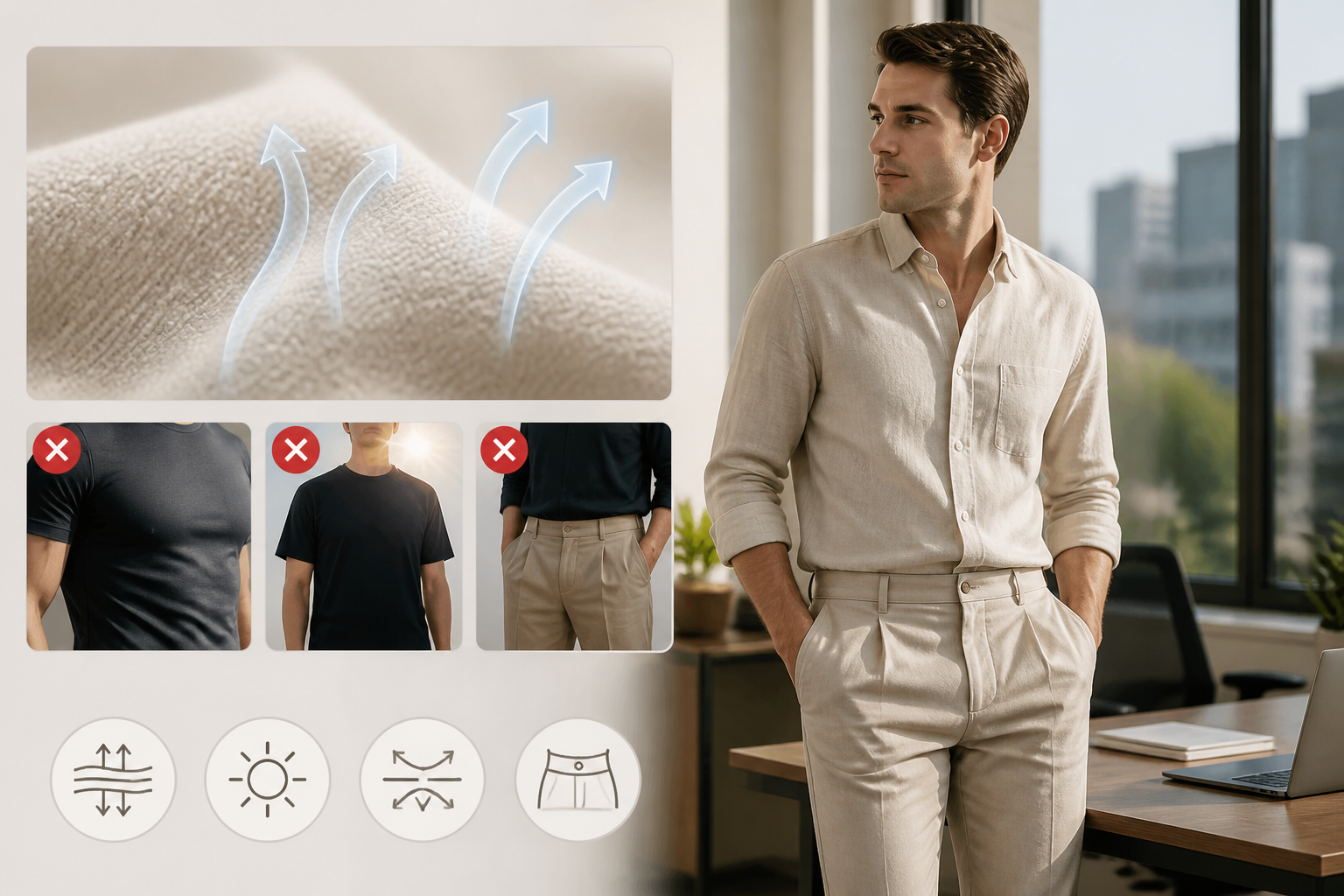
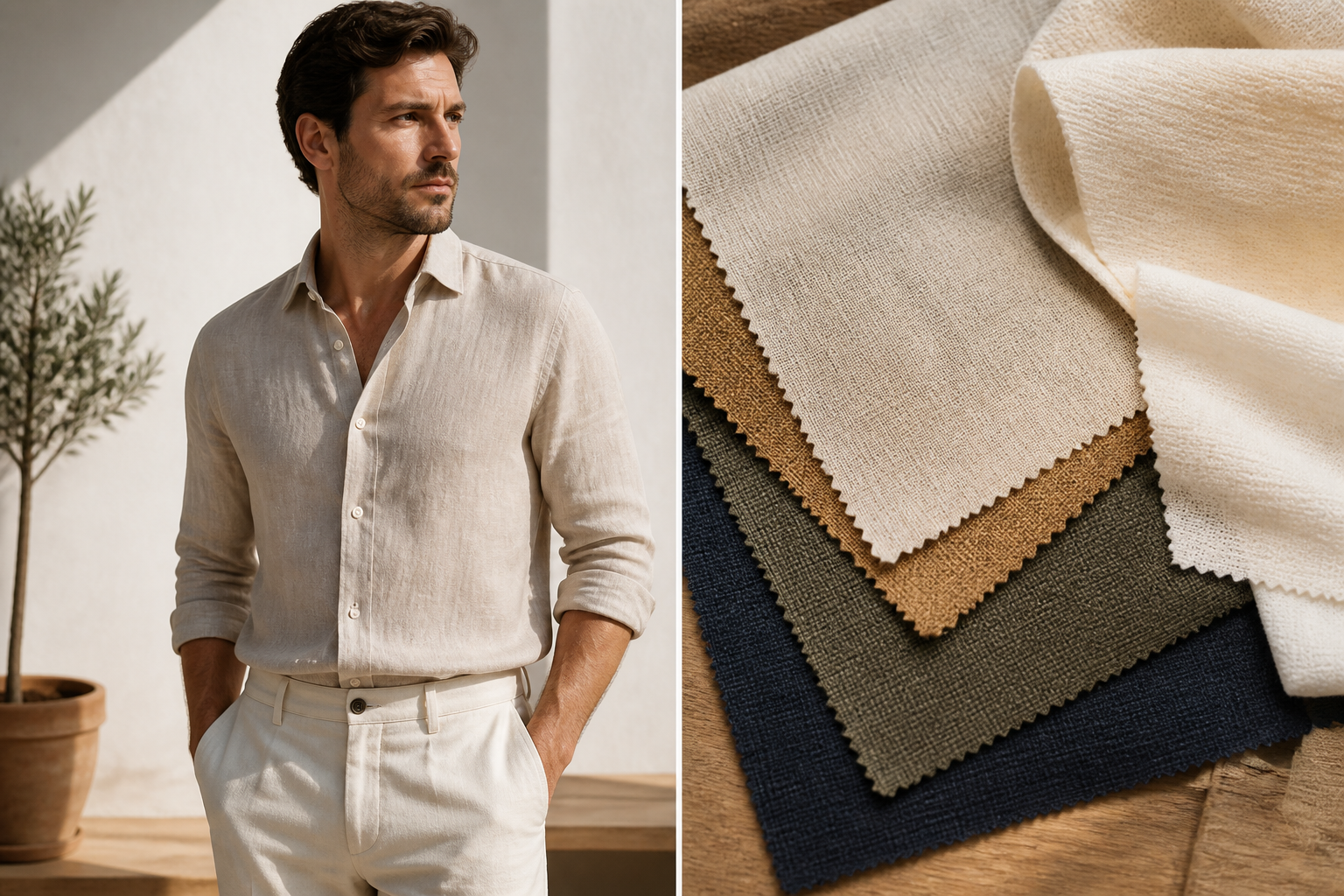
Heat-proof fabrics to reach for: Linen, cotton gauze, Tencel, bamboo jersey. They move moisture away from skin and don't trap heat the way polyester does. Loose weaves breathe better than tight ones — it's not just about how light the fabric feels when you hold it, it's how air moves through it when you're wearing it.
What to avoid: Any synthetic blend that stretches tight against the body, dark colors in direct sun, and silhouettes with a lot of fabric pooling at the waist. In summer specifically, structured waistbands in non-stretch fabric become uncomfortable fast.
The Summer Office Day
The office adds a constraint that summer fights against: professional polish usually means more fabric, more structure, and darker colors — all of which trap heat.
The solution isn't to ignore the dress code. It's to find pieces that hold structure without weight.
What actually works:
- Tailored linen trousers + fitted knit top in a neutral: Linen holds a clean line better than cotton when it's humid. A fitted knit (not a loose jersey tee) reads put-together. Pair with loafers or pointed-toe flats. This works in finance offices and creative agencies equally.
- Sleeveless silk or satin blouse + tailored wide-leg trousers: The blouse material matters — silk drapes without clinging. Tuck it in. Keep accessories minimal so the simplicity reads intentional.
- Midi wrap dress in a solid or small print: The wrap silhouette adjusts to fit without a structured waist. Solid colors or contained prints (small florals, thin stripes) read professional. Avoid large tropical prints for client-facing days.
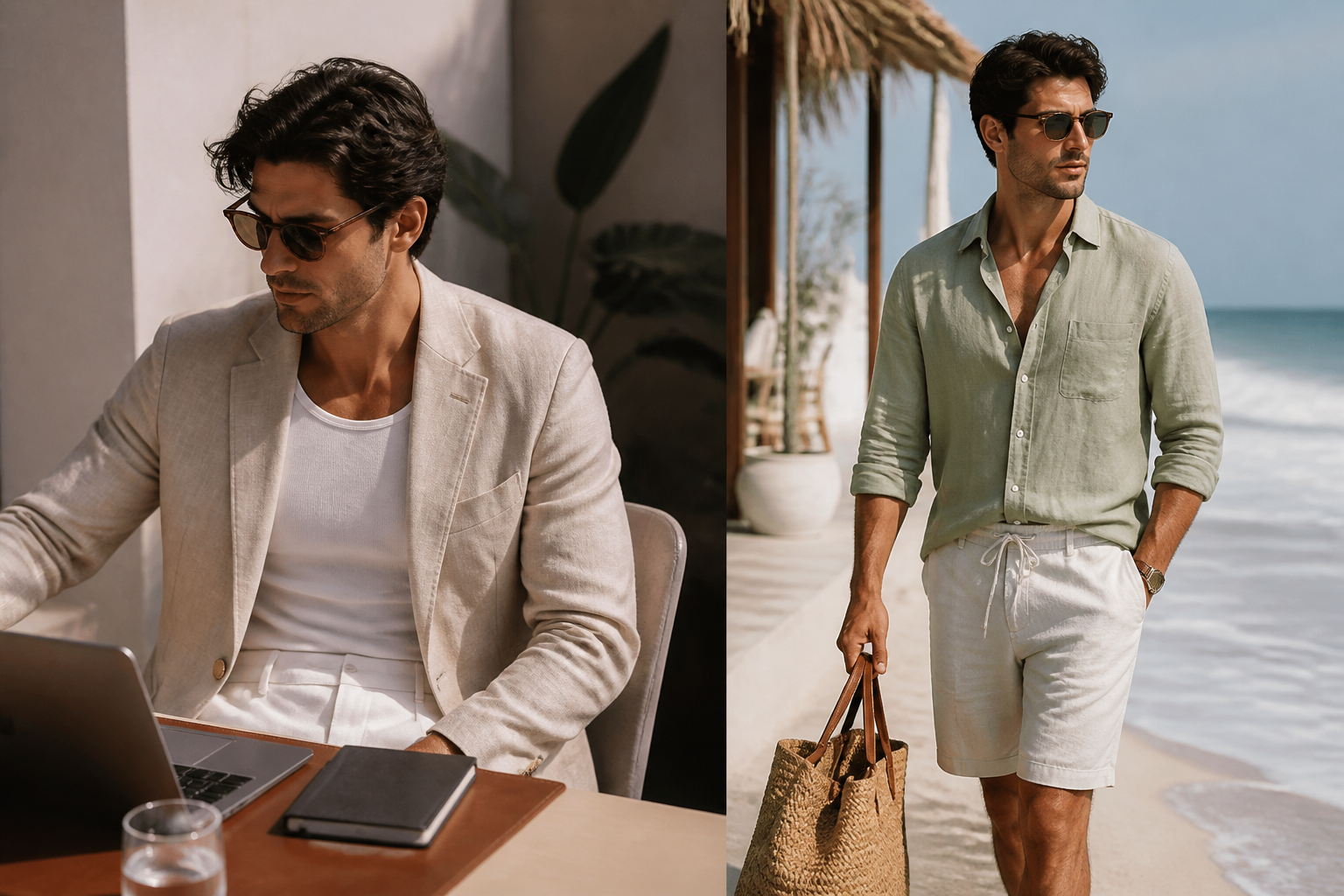
- Linen blazer over a fitted camisole: The blazer covers you for meetings, comes off when you're back at your desk. Sand, soft sage, or white linen blazers look deliberate rather than formal.
The one rule: Fit matters more than formality in summer. A well-fitting linen shirt looks more professional than an ill-fitting blazer. The question isn't "is this formal enough" — it's "does this look deliberate?"
Beach Day (With Plans After)
Beach outfit ideas split into two situations: a full beach day where you're done after, and a beach day that transitions into the rest of the afternoon or evening.
Pure beach day:
- Bikini or swimsuit + matching cover-up (same print or tonal): reads intentional, not like you grabbed whatever was near the door
- Linen shorts + loose button-down in a stripe: neutral enough that you can walk into a casual lunch without changing
- Woven bag + flat sandals that handle both sand and sidewalk
Beach-to-evening transition:
This is where most summer outfit ideas fall short. The mistake is bringing a bag big enough to change into something else but not having the right "after" outfit.
Better approach: choose a swimsuit that works under a nicer cover-up or dress. A simple black one-piece under a white button-down maxi dress — you pull off the shorts, button the dress, swap the tote for a smaller bag. Done.
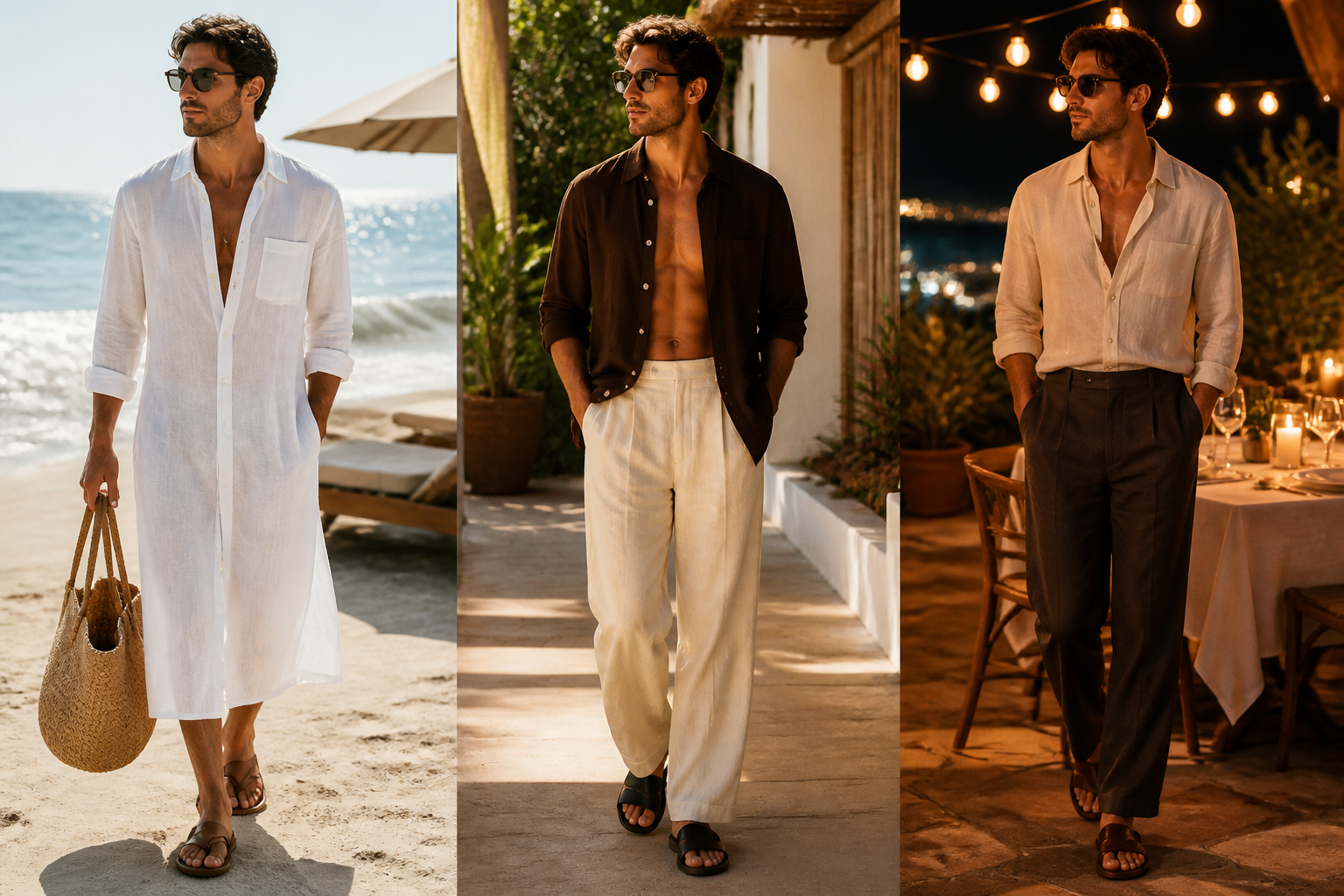
- One-piece swimsuit + white linen button-down maxi dress + leather flat sandals: works from sand to restaurant
- Bikini top + high-waisted linen wide-leg trousers + slides: the trouser silhouette is elevated enough that a simple top reads intentional rather than underdressed
The beach outfit principle: Your cover-up should be able to stand alone as an outfit. If it can't, you're limited to staying at the beach.
Evening Plans (Outdoor Dinner, Rooftop, Garden Event)
Summer evenings are actually easier than people make them. Heat drops, you're less worried about sweating through your outfit, and a single elevated piece does most of the work.
What works:
- Slip dress in satin-finish fabric: The easiest summer evening outfit. The material does the elevating — even a simple silhouette reads occasion-appropriate. Add thin jewelry and a small bag. Done in under five minutes.
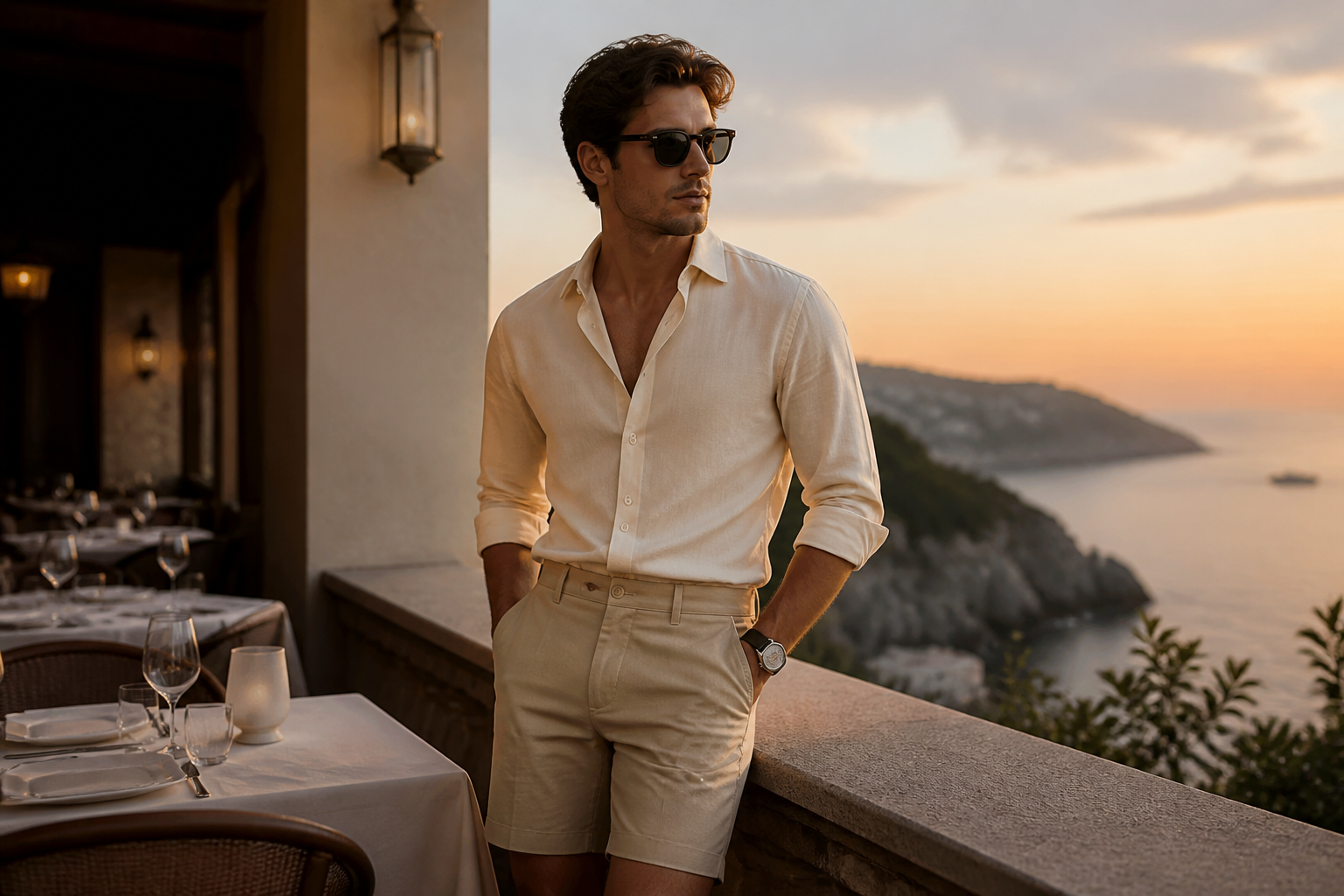
- Linen wide-leg pants + silk or satin cami + heeled sandal: This combination photographs well and works for anything from casual rooftop to semi-formal dinner. The elevated shoe and nicer fabric pull the linen into evening territory.
- Printed co-ord set: Two matching pieces read intentional and put-together with minimal effort. Pair with solid accessories — the print is doing the work, everything else should be quiet.
- Structured shorts (mid-thigh, with a zip and button) + silk blouse: Works for creative or casual dinner environments where full trousers would feel too formal.
Temperature note: Evenings in summer still swing. Bring a thin wrap or oversized scarf rather than a jacket. It takes up less space and doesn't add the visual bulk a cardigan creates over a dress.
The Heat-Proof Principles (What Fabric and Silhouette Actually Mean)
Most summer outfit guides stop at "wear light colors and breathable fabric." That's not wrong, but it's incomplete.
Silhouette matters as much as fabric. A piece of fabric that flows away from your body keeps you cooler than the same fabric cut close. Wide-leg trousers in linen are cooler than slim-fit linen trousers — the air moves. Flowy midi skirts are cooler than pencil skirts in the same material.
Color is about surface temperature, not comfort. Dark colors absorb heat when you're in direct sun. In shade or indoors, they behave the same as light colors. If you're mostly inside, don't sacrifice your whole outfit aesthetic to wear pale neutrals.
Fabric weight vs. fabric type: A thin polyester can feel light but will hold heat against your skin. A heavier linen lets air move through it and wicks moisture. Grams per square meter matter less than weave structure. When in doubt: hold the fabric up to light. If you can see through it, it has the weave structure you want for hot days.
The one fabric to avoid in summer: Anything with "stretch" from synthetic fiber (polyester-lycra, nylon-spandex). It feels comfortable at 9am and becomes miserable by noon in the heat. Natural-fiber stretch — like a ponte with viscose, or jersey from bamboo — behaves differently. Check the tag before assuming.
When You're Still Not Sure
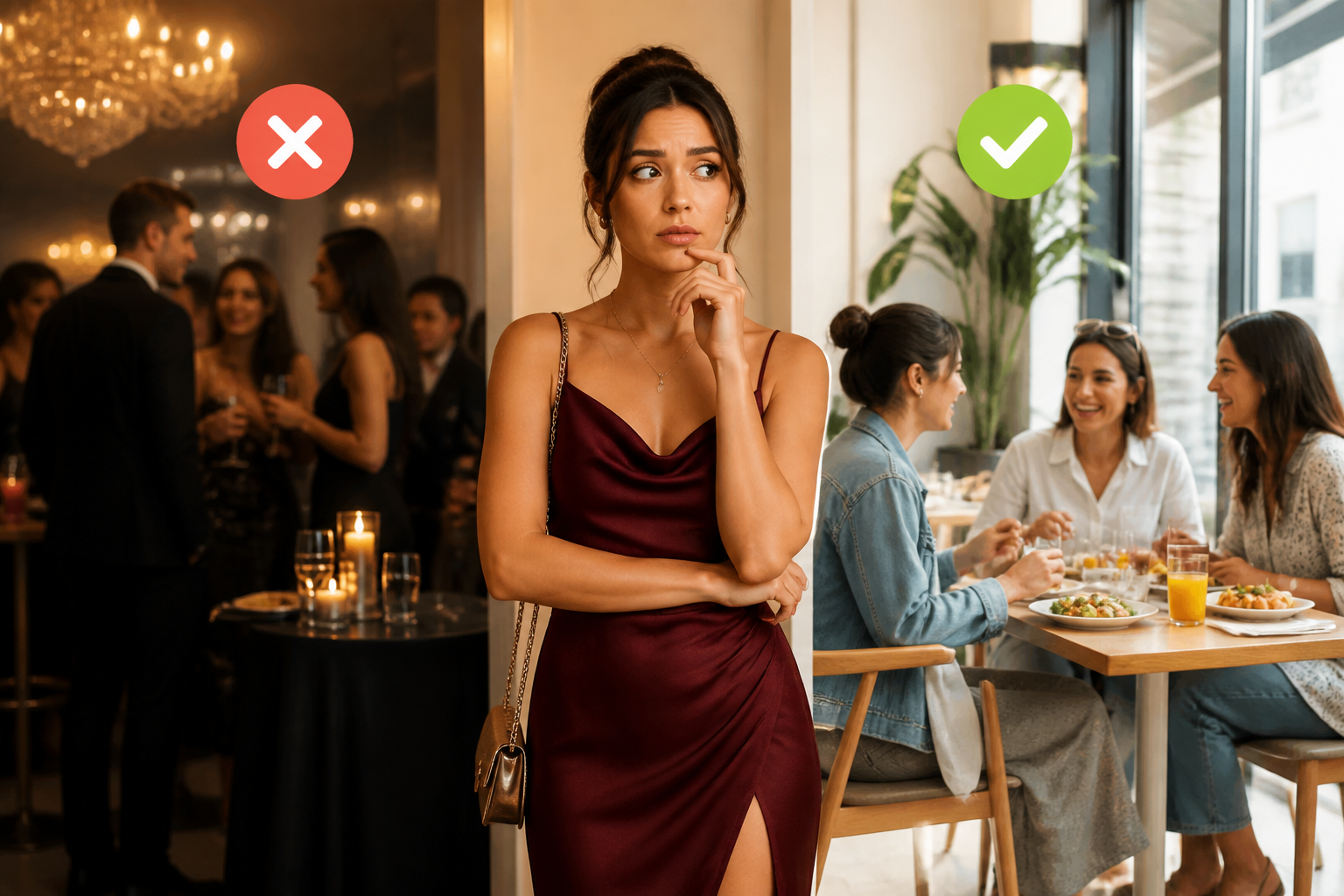
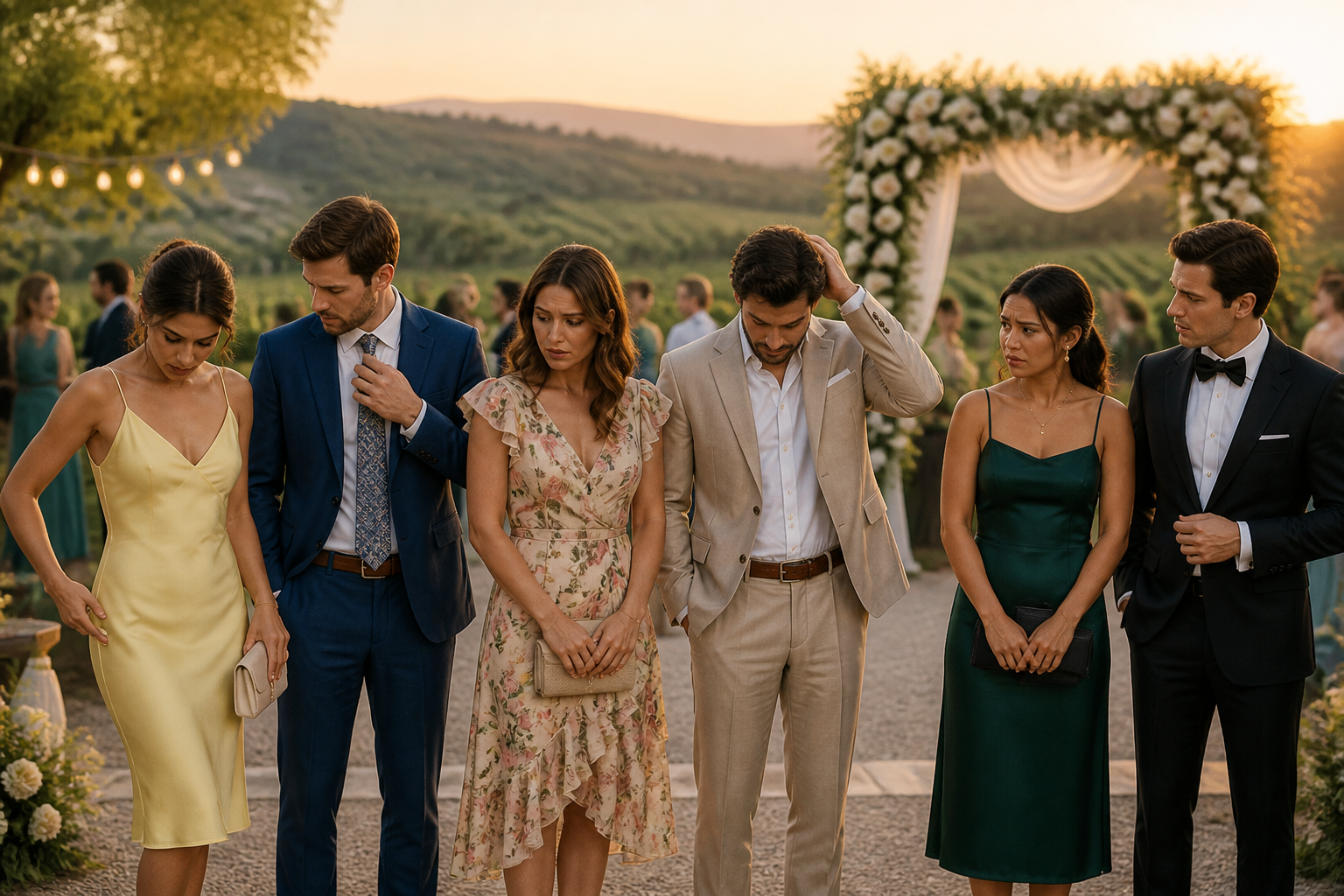
The hardest part of "what should I wear today" isn't the outfit decision. It's the gap between how something looks in your closet and how it reads in context — the office, the restaurant, the event.
A few things that help:
- Take a photo before you leave. Looking at yourself on a screen creates enough psychological distance to catch what a mirror doesn't — proportion issues, color combinations that feel off, a formality level that's slightly wrong for the occasion.
- Ask whether the outfit solves the highest-stakes moment of your day. Everything else is secondary.
- Default to slightly more put-together than necessary. Removing a layer or simplifying is easier than fixing underdressed.
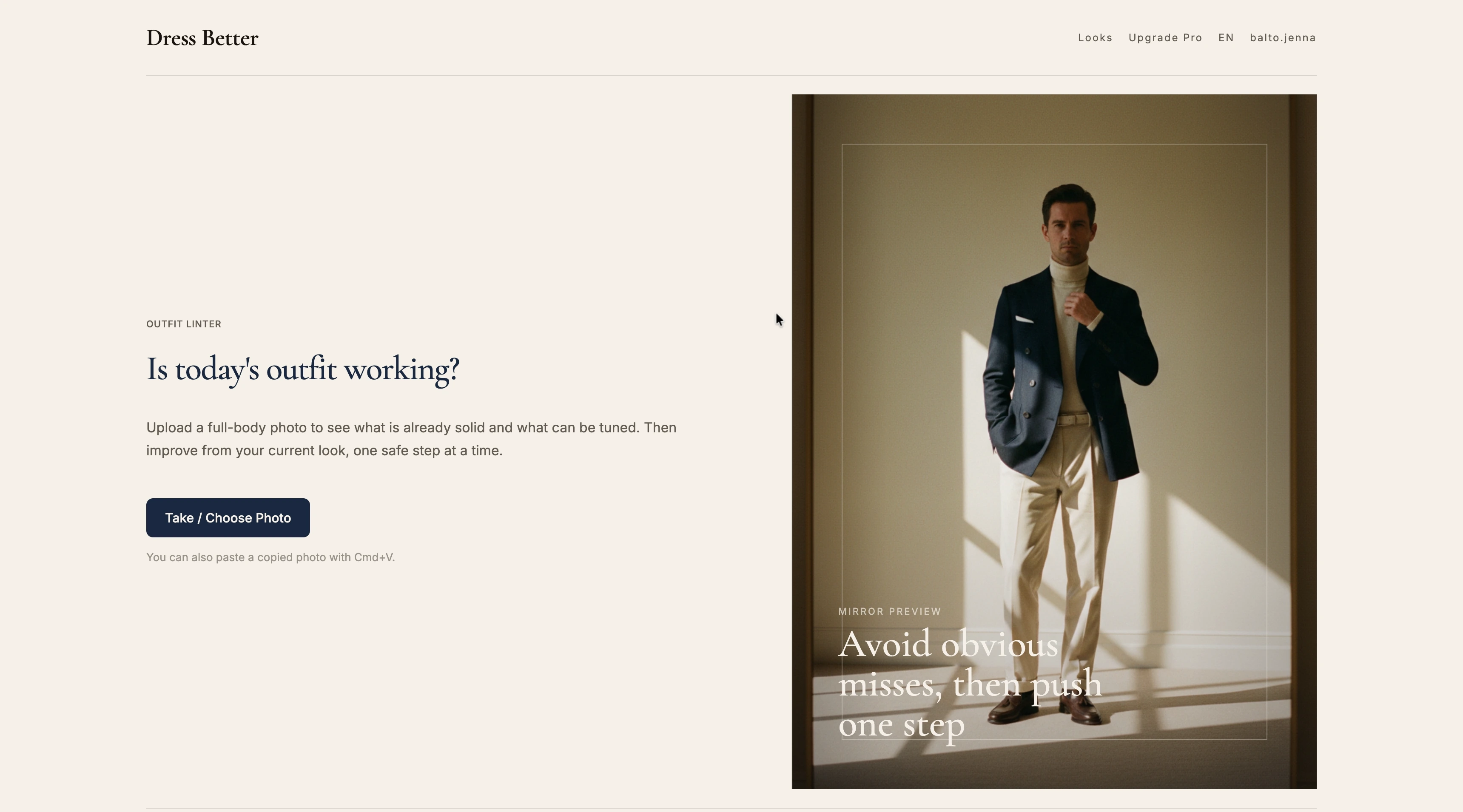
If you want specific feedback rather than general principles, Dress Better analyzes outfit photos across four dimensions: color coordination, fit proportions, materials, and occasion-appropriateness. Upload a photo, get specific notes on what's working and what to adjust. It's built for the "is this actually right for today?" check — not a full wardrobe overhaul, just a fast gut-check with more precision than a mirror allows.
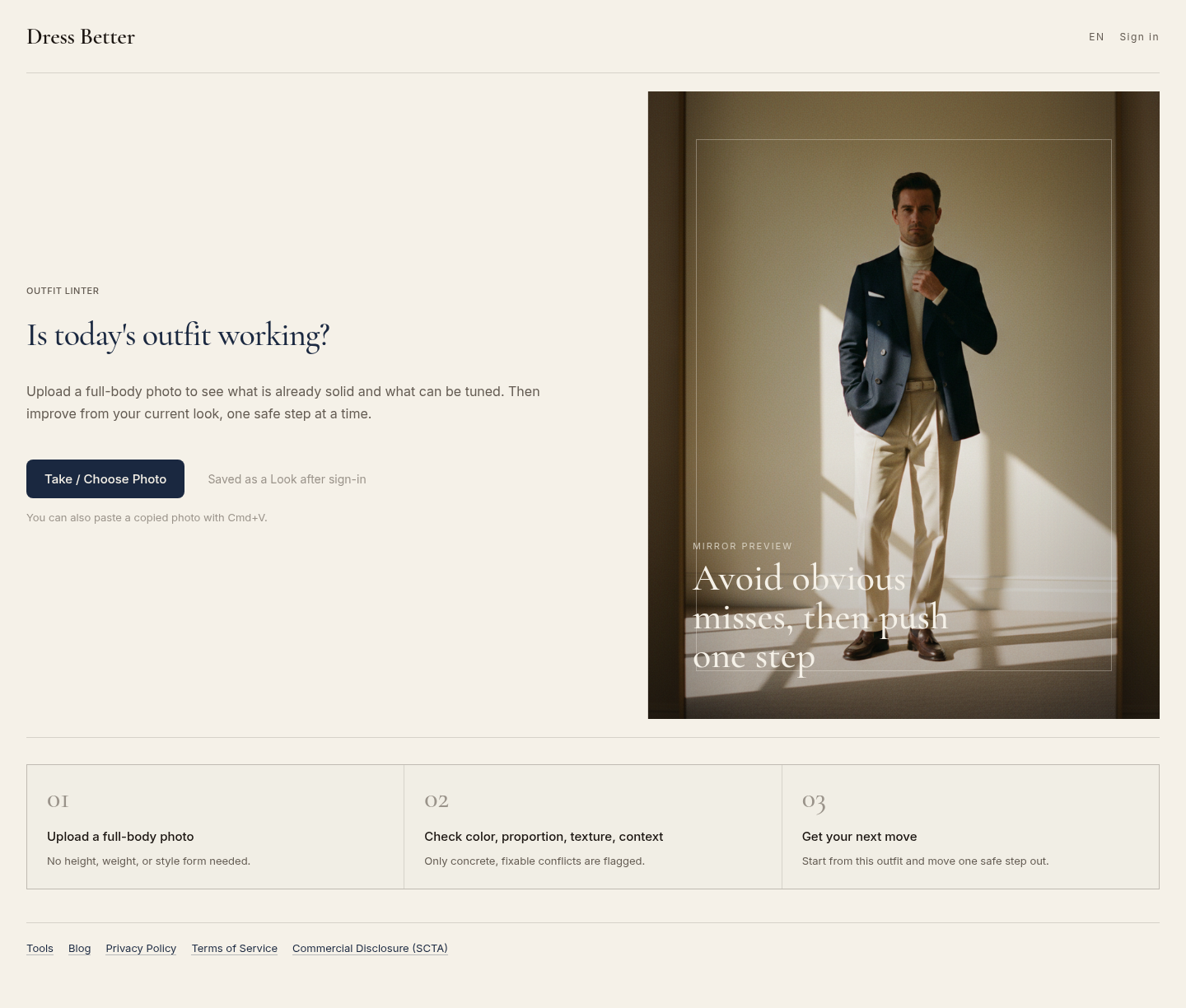
Not sure if today's outfit is landing right? Try Dress Better — upload a photo and get specific feedback on color, fit, and occasion fit.
Disclosure: This article was produced by the Dress Better editorial team. It includes references to Dress Better's own AI outfit analysis tool. All outfit advice reflects the team's styling experience and observation of common patterns in user-submitted outfit reviews.