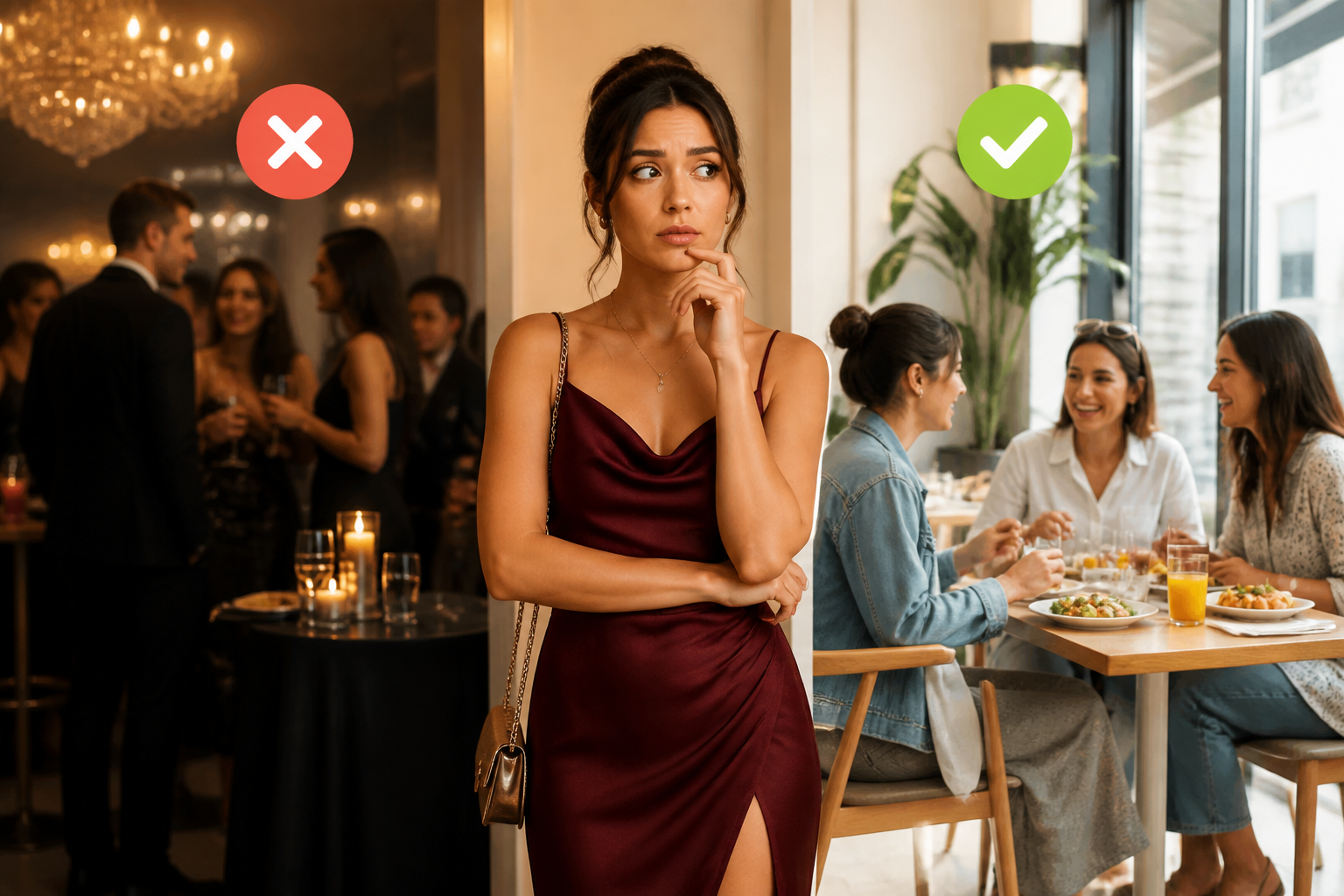
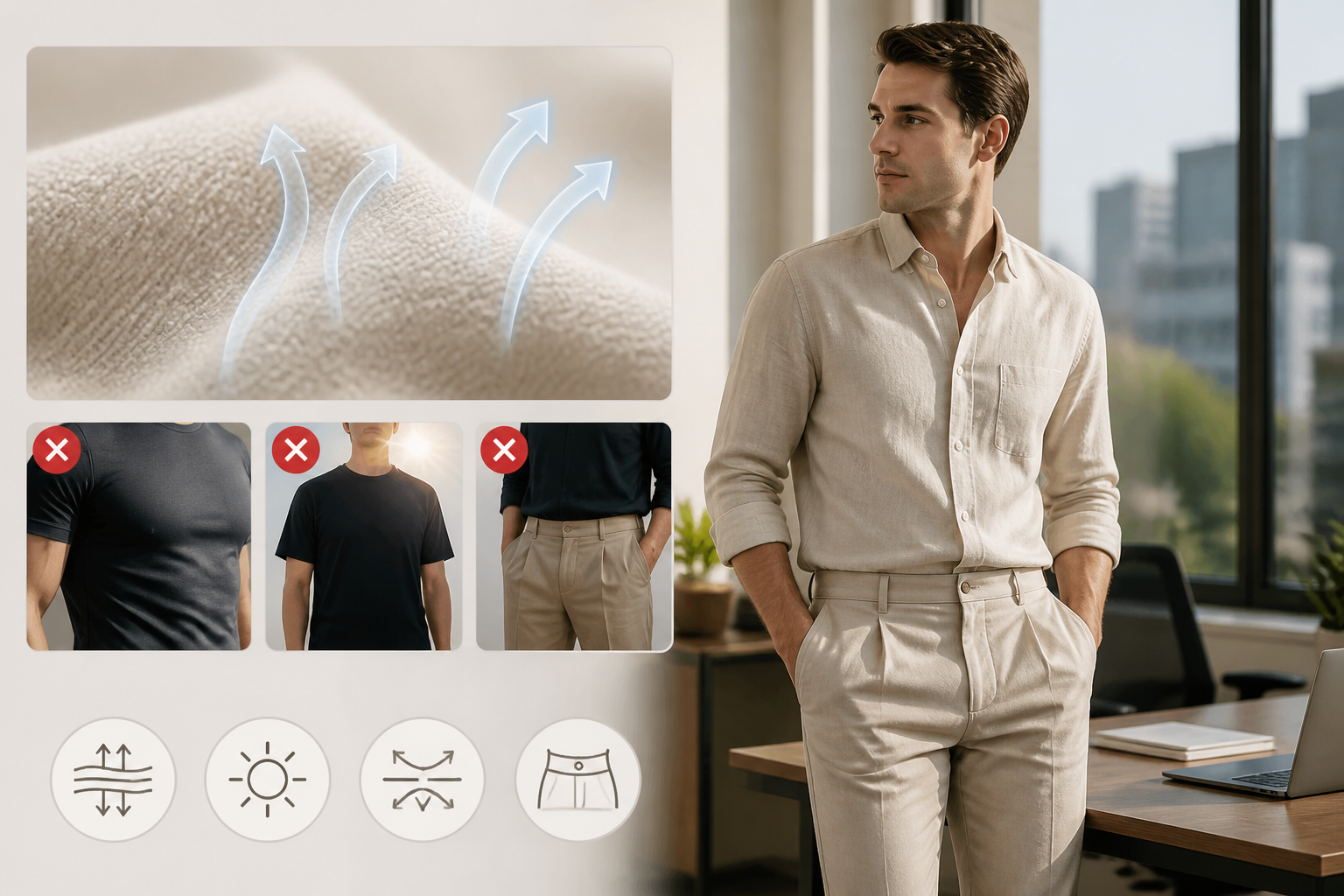
Outfit of the Day (OOTD): How to Get Real Style Feedback
If you've spent any time on Instagram, TikTok, or X in the last few years, you've seen it: a person posts a full-body photo with the caption "rate my outfit 1–10." The replies flood in — honest numbers, unsolicited advice, a few emoji. What started as a humble hashtag has turned into one of social media's most honest feedback rituals.
Outfit of the day (OOTD) is no longer just about sharing what you wore. It's about getting real input on whether it works — and improving from there.
This guide covers what OOTD actually means, why the rating ritual has gone viral, how to post one that gets useful feedback, and how to use daily outfit sharing as a genuine style development tool.
What Does "Outfit of the Day" (OOTD) Mean?
OOTD stands for Outfit of the Day. The phrase is used on social media when someone shares what they're wearing on a particular day — usually with a full-body photo, a hashtag, and sometimes a plea for feedback.
On TikTok alone, #OOTD has accumulated over 21.3 million posts , according to Vogue. On Instagram, the hashtag has passed 80 million . The format appears across every platform: X, Reddit, Pinterest, YouTube — wherever people can post photos and get responses.
What makes OOTD different from general fashion content is the daily ritual element. It's not a professional photoshoot or a brand campaign. It's "here's what I'm actually wearing today — what do you think?"
That vulnerability is exactly why the feedback angle resonates.
Why Strangers Rating Outfits 1–10 Is Going Viral
Scroll X on any given morning and you'll find them: posts asking strangers to rate an outfit on a scale of 1 to 10. No filter, no curated lighting. Just a photo and a number request.
Analysis of X posts in June 2026 found 59+ posts from 51 unique authors all following the same format — post an OOTD, ask for a 1–10 score. One representative example shows typical engagement: people reply with actual numbers, specific critiques ("the belt is too wide for that silhouette"), and genuine encouragement.
This isn't random. It exposes a gap that fashion social media has always had:
- Instagram rewards likes, not honest feedback
- Your friends don't want to tell you the jacket doesn't work
- Personal stylists cost money
- Reddit fashion communities are useful but niche
The 1–10 request is a workaround. It invites structured feedback in a format that feels less personal than "tell me what's wrong with my outfit." A number is easier to give and easier to receive.
The demand behind it is real: people want objective, specific feedback on their daily outfits, and they're actively creating the infrastructure to get it.
How to Post an Outfit of the Day That Actually Gets Useful Feedback
Getting useful feedback from an OOTD post isn't automatic. Here's how to do it right.
1. Take a Proper Full-Body Photo
The photo quality directly determines the quality of feedback you get. A blurry mirror selfie cropped at the knees tells viewers nothing about your proportions, hem lengths, or shoe choice.
What works:
- Stand against a plain wall or neutral background
- Include the full body — head to toe (or at least ankle)
- Use natural light, facing a window
- Don't angle the camera up or down; keep it at chest height
The most common frustration in OOTD communities: "I can't even see the full outfit." Give people something to actually assess.
2. Ask a Specific Question
"What do you think?" gets you "cute!" "Rate me 1–10" gets you a number. But the most actionable feedback comes from specific questions:
- "Does the color combination work?"
- "Is this too casual for a dinner out?"
- "Does the jacket overwhelm the rest of the look?"
Specific questions trigger specific answers. The more precise your ask, the more useful the response.
3. Include Context
Feedback without context misses. "This is too formal" means nothing if the reviewer doesn't know you're wearing it to a casual Friday office. Always add:
- Occasion: Where are you wearing this?
- Weather / season: Is this a winter layer situation?
- Goal: Are you going for professional, relaxed, elevated casual?
One sentence of context changes the entire quality of feedback you receive.
4. Post in the Right Place
Platform matters:
Platform | Best for
X / Twitter | Fast 1–10 ratings, direct honest feedback
Reddit (r/femalefashionadvice, r/malefashionadvice) | Detailed written advice, community norms
Instagram | Visual inspiration sharing, less critique culture
TikTok | Video OOTD with overlay comments
If you want honest critique rather than validation, X and Reddit deliver. If you want reach and inspiration, Instagram and TikTok are better fits.
5. Share Consistently
A single OOTD post tells you almost nothing. The value compounds with repetition. When you post regularly, you start to notice:
- Which combinations consistently get positive reactions
- Which elements get flagged every time ("the shoes always clash")
- How your style is evolving over time
Consistency also builds an audience that knows your style, which means their feedback becomes more calibrated over time.
The Feedback Problem — And a Better Solution
The 1–10 ritual on X works, but it has limits. You're dependent on who happens to see the post. Some responders are helpful; some just leave a number with no explanation. The feedback isn't structured, it can't track your patterns across outfits, and it doesn't tell you why something works or doesn't.
This is exactly the gap that AI outfit analysis was built to fill.
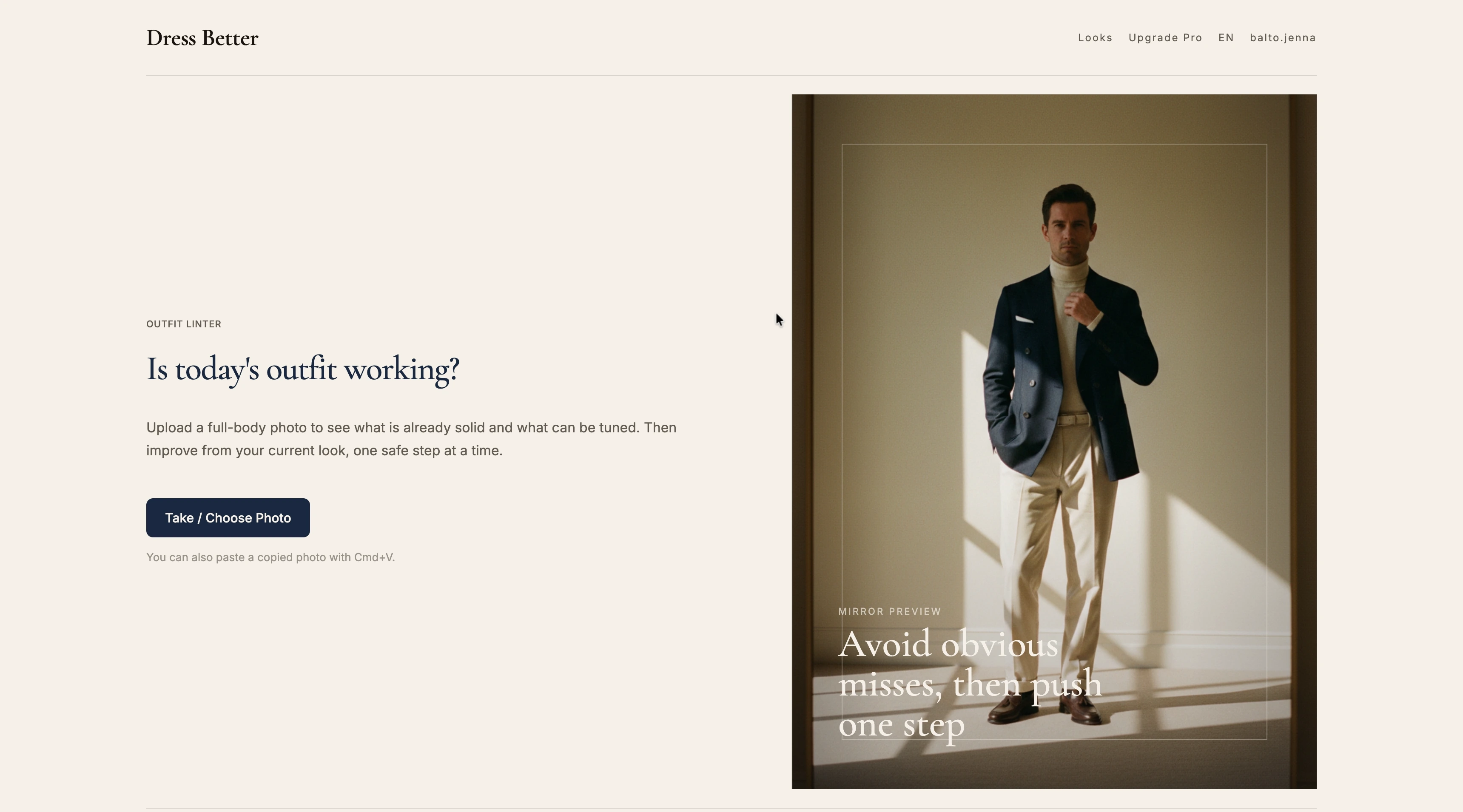
Dress Better is an AI outfit analyzer that treats your OOTD the way a clothing linter would treat code: upload a full-body photo, and the AI evaluates four specific dimensions — color coordination, fit proportions, material choices, and occasion-appropriateness — without requiring you to input height, weight, or style preferences.
The analysis is structured rather than vibes-based. Instead of "looks good" or a generic 7/10, you get specific feedback: which color combination is working, whether the proportions are off, and one or two concrete adjustments that would improve the look.
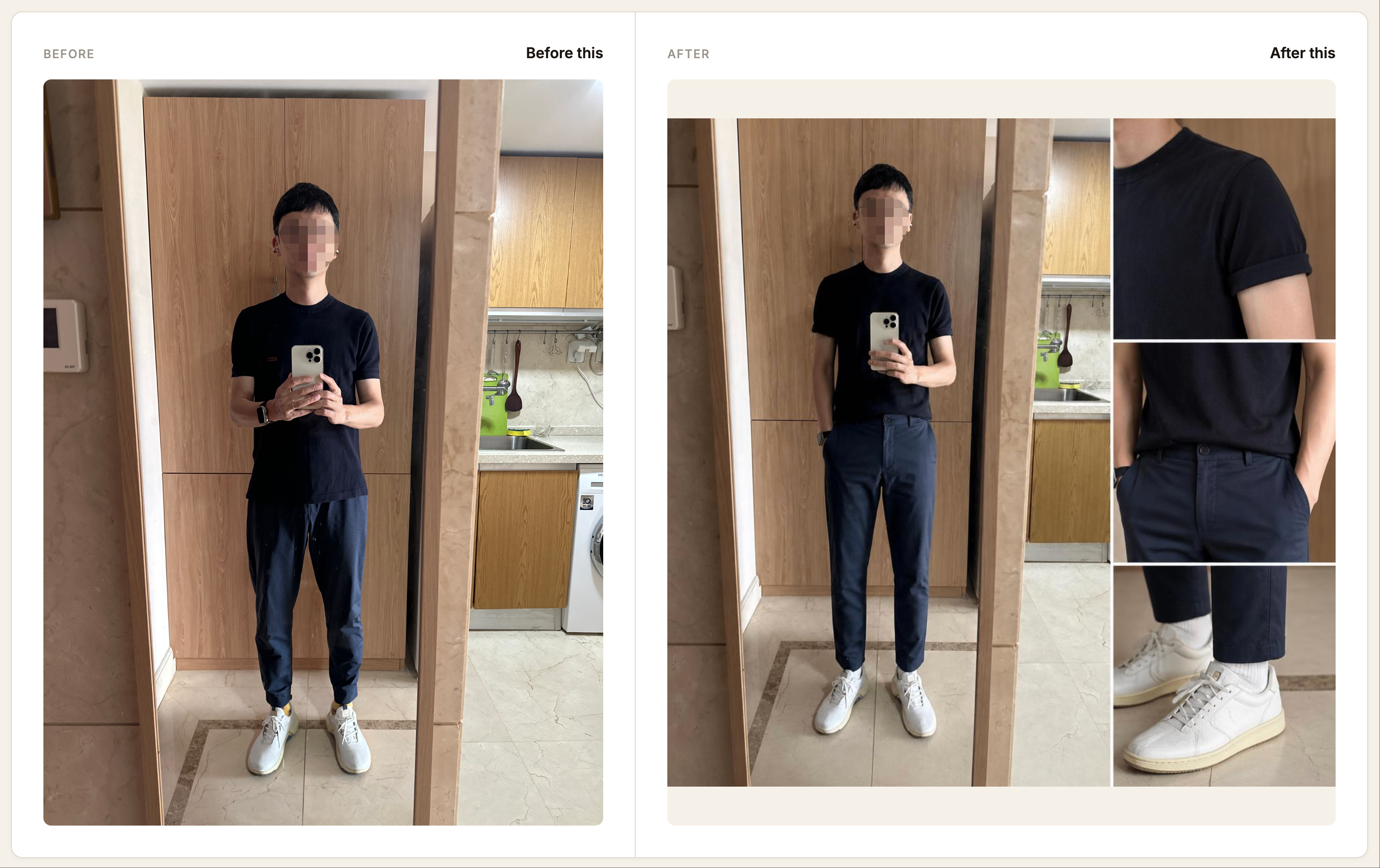
The key design choice is incremental feedback. Rather than telling you to overhaul the entire outfit, the system identifies the single adjustment that would make the biggest improvement. Tuck the shirt. Roll the sleeves. Swap the shoes. This makes the feedback actually actionable rather than overwhelming.
Every analysis is saved as a "Look" in your history. Over time, you can see which issues come up repeatedly — a pattern recognition layer that a single X reply can't give you.
5 OOTD Ideas to Get Started Today
If you're building a daily outfit habit, these five starting angles give you variety without requiring a massive wardrobe.
1. The Uniform Variation
Pick a formula that works — dark jeans, white shirt, clean shoes — and experiment with one variable each day. Same structure, different execution. This is the easiest way to start posting OOTDs without feeling like you need a new outfit every time.
2. The Work-to-Weekend Remix
Take something you wear to work and show how you'd style it for the weekend. A blazer with sneakers instead of dress shoes; trousers with a graphic tee instead of a button-down. This is high-engagement content because the transition is relatable.
3. The Weather Outfit Challenge
Post your solution to a specific weather problem: "35°F and I still need to look put together." Practical constraints make OOTD content more useful and drive more specific feedback than open-ended posts.
4. The AI-Scored Look
Share your OOTD alongside its AI analysis score. Screenshot the feedback from Dress Better and post both the outfit and the breakdown. This format is novel, specific, and invites discussion about whether people agree with the AI's assessment.
5. The Repeat Outfit Redemption
Post an outfit you've worn before, but this time styled differently based on feedback you received. The before/after narrative — "last time this got flagged, here's how I changed it" — is compelling content and demonstrates genuine style growth.
Pro Tips for Daily Outfit Sharing
Start a saves folder. Screenshot every OOTD that resonates — yours or someone else's. Over time, patterns emerge: you keep saving things with the same silhouette, the same color palette, the same proportions. That's your actual style direction, not what you think your style is.
Separate "for feedback" from "for inspiration." Follow OOTD accounts for daily inspiration. Post your own OOTDs when you want feedback. These are different modes. Mixing them — posting inspiration boards and calling it a feedback loop — doesn't work.
Treat negative feedback as data. The 1–10 ritual works because a low score with no context is still information: something isn't landing. A structured AI analysis converts that vague signal into something you can act on.
Commit to a time window. The most useful OOTD practice is pre-event, not post-event. Posting your outfit the night before or morning of — while you can still change it — is when feedback is actually actionable.
Frequently Asked Questions
What does OOTD mean?
OOTD stands for "Outfit of the Day." It's a social media phrase used when sharing what you're wearing on a given day — commonly hashtagged as #OOTD on Instagram, TikTok, and X.
How do I ask strangers to rate my outfit?
Post a full-body photo with a caption requesting a 1–10 rating and any specific feedback you want. X has become the most active platform for this format. For structured, private feedback without needing public visibility, Dress Better provides AI-powered outfit scoring with a breakdown by color, proportions, materials, and occasion fit.
What makes a good OOTD photo?
A good OOTD photo is full-body, taken in natural light, with a neutral background. Stand straight, ensure all clothing is visible from head to toe, and avoid angles that distort proportions. The goal is to show the complete outfit as clearly as possible so feedback is based on the actual look, not the lighting or angle.
How often should I post OOTDs?
Consistency matters more than frequency. Even two or three times a week builds enough of a history to start seeing patterns. Daily posting accelerates the feedback loop but isn't necessary to benefit from the practice.
Can AI give useful outfit feedback?
Yes — especially for structured analysis. AI outfit tools like Dress Better evaluate color coordination, proportions, fabric choices, and occasion-appropriateness against established style principles. The advantage over social media feedback is consistency: the same criteria applied every time, with specific reasoning rather than a number.
The Bottom Line
Outfit of the day started as a hashtag and became a feedback ritual. The viral 1–10 rating format on X is evidence that people don't just want to share their outfits — they want honest, specific input that helps them dress better.
The tools to close that loop now exist: post in communities that give real feedback, ask specific questions, include context, and use AI analysis to add structure to what would otherwise be subjective. Whether you're building a personal style from scratch or fine-tuning an already solid wardrobe, daily outfit sharing is one of the fastest ways to improve.
Ready to turn your next outfit of the day into actionable data? Upload a photo to Dress Better and see exactly what's working — and what one adjustment would make it better.
Disclosure: This article is published by the Dress Better team. References to Dress Better's AI outfit analysis reflect the product's actual capabilities as documented in its features. External statistics are cited from their original sources.
Sources
- Vogue — The economy of #OOTD : TikTok #OOTD post count (21.3 million)
- Refinery29 — OOTD Advice: Outfit of the Day Tips : Instagram hashtag count (80 million+)
- X / Twitter — Sample OOTD rating post : representative example of the 1–10 rating ritual
- GQ South Africa — The life-changing magic of asking kind strangers to rate your looks online : context on online appearance rating communities
- Highsnobiety — A Deep Dive Into Reddit's Toxic Beauty Community : documentation of r/TrueRateMe and community dynamics