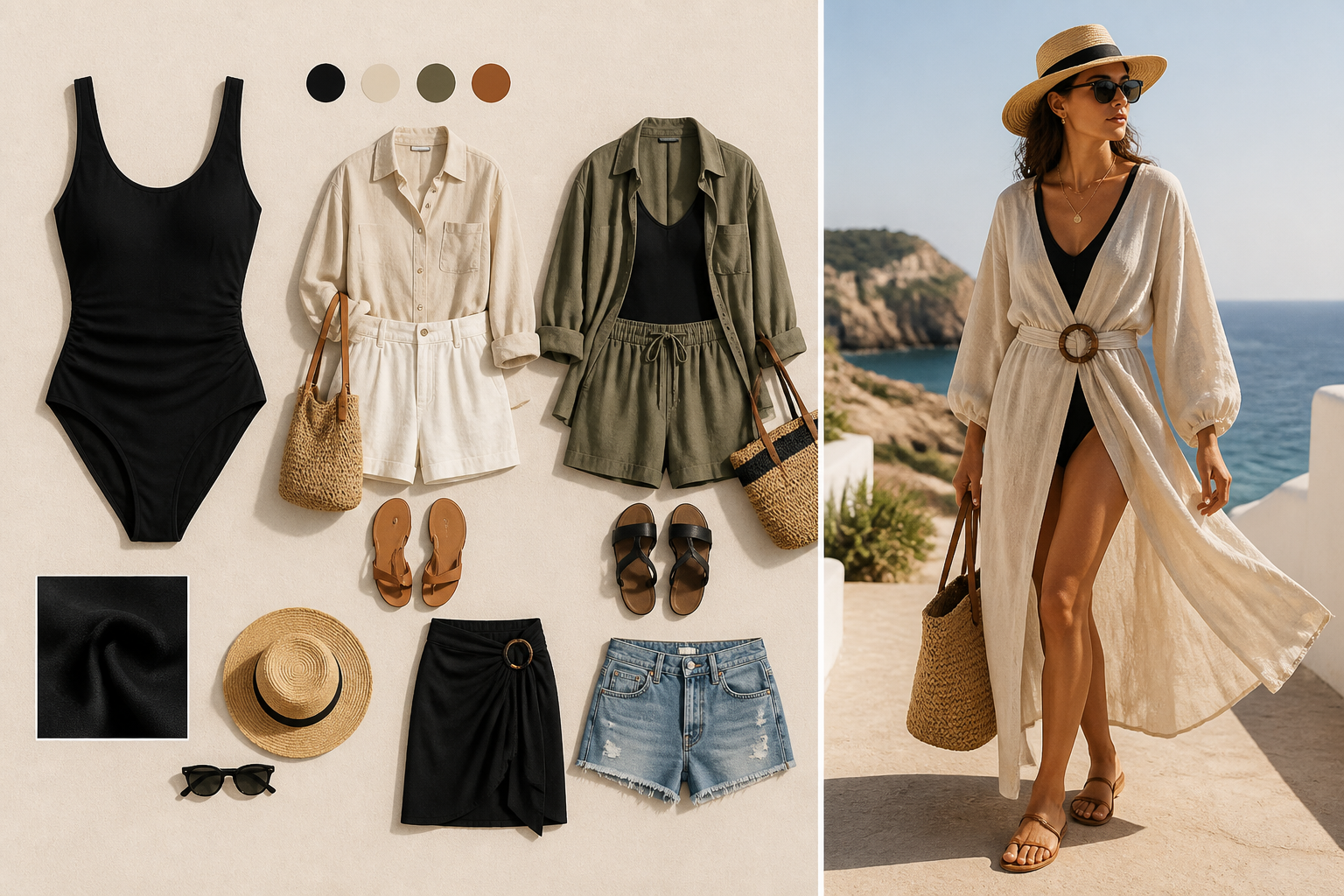
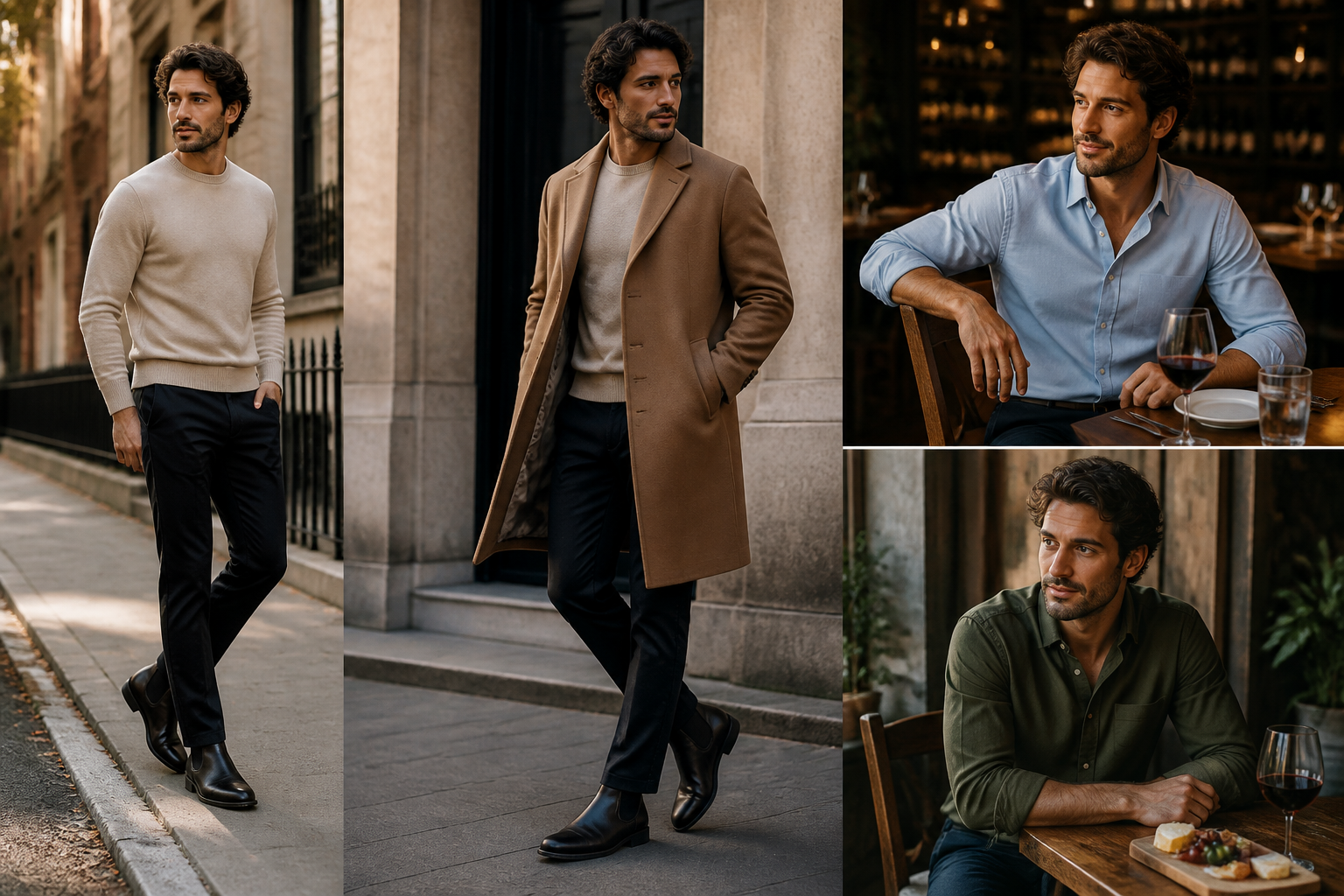
AI Style Recommendations vs. Social Media Outfit Ratings: Which Actually Helps You Get Dressed?
There's a pattern playing out quietly across fashion communities online. People who used to post mirror selfies on Reddit asking "rate my outfit" are now turning to AI tools instead — not because social feedback is useless, but because it rarely answers the question they're actually asking.
The question isn't "do people think this looks good?" It's "should I walk out the door in this?"
Those are different questions. And the gap between them explains why AI style recommendations are gaining traction with people who care about dressing well but don't have a stylist on speed dial.
How Social Media Outfit Feedback Actually Works
Platforms like Reddit's r/femalefashionadvice, Instagram comment sections, and TikTok styling threads have built real communities around fashion. People share looks, get reactions, and occasionally receive genuinely useful advice. For someone just starting to develop a personal style, these spaces offer something valuable: proof that other people notice and care about clothes.
But the mechanics of social feedback create some predictable problems.
Votes and likes measure approval, not accuracy. An outfit that photographs well in good lighting with a flattering angle will collect more positive reactions than one that actually works better in real life. Social platforms optimize for engagement, which means visually striking, on-trend, or aspirational content performs — regardless of whether it's practical advice for someone with a different body type, different wardrobe, or different daily context.
Comments trend toward the extremes. Feedback in public comment sections tends to cluster around "love this" or "this doesn't work at all." The detailed middle ground — the specific fix that would make a good outfit great — rarely makes it into a comment thread. Nuance doesn't get upvotes.
You're asking strangers who don't know your context. The people commenting don't know where you're going, what you already own, or what style you're trying to develop. A suggestion to "add a blazer" is easy to write but unhelpful if you don't own one. Advice calibrated to a completely different aesthetic misses the point entirely.
There's a real privacy cost. Posting an outfit photo publicly, or even in a semi-private community, means sharing your appearance with an audience. For a lot of people, especially those still building confidence in how they present themselves, that's a meaningful barrier. The feedback loop requires exposure that not everyone is comfortable with.
What AI Style Recommendations Do Differently
AI outfit analysis approaches the same problem from a fundamentally different angle. Instead of asking "what do strangers think of this," it asks "what specifically could be improved here, and why."
Tools like Dress Better work by analyzing a full-body photo of your actual outfit against a structured set of criteria: color coordination, fit proportions, material choices, and occasion-appropriateness. The output isn't a rating or a reaction — it's a specific, actionable assessment of what's working and what could be adjusted.
A few things make this model meaningfully different from social feedback:
It evaluates the outfit, not the photo. AI analysis doesn't respond to lighting, angle, or presentation quality the way human viewers do. It's assessing the clothes — whether the proportions balance, whether the colors coordinate, whether the formality level fits the context. A badly lit bathroom mirror photo gets the same quality of structural feedback as a professional shot.
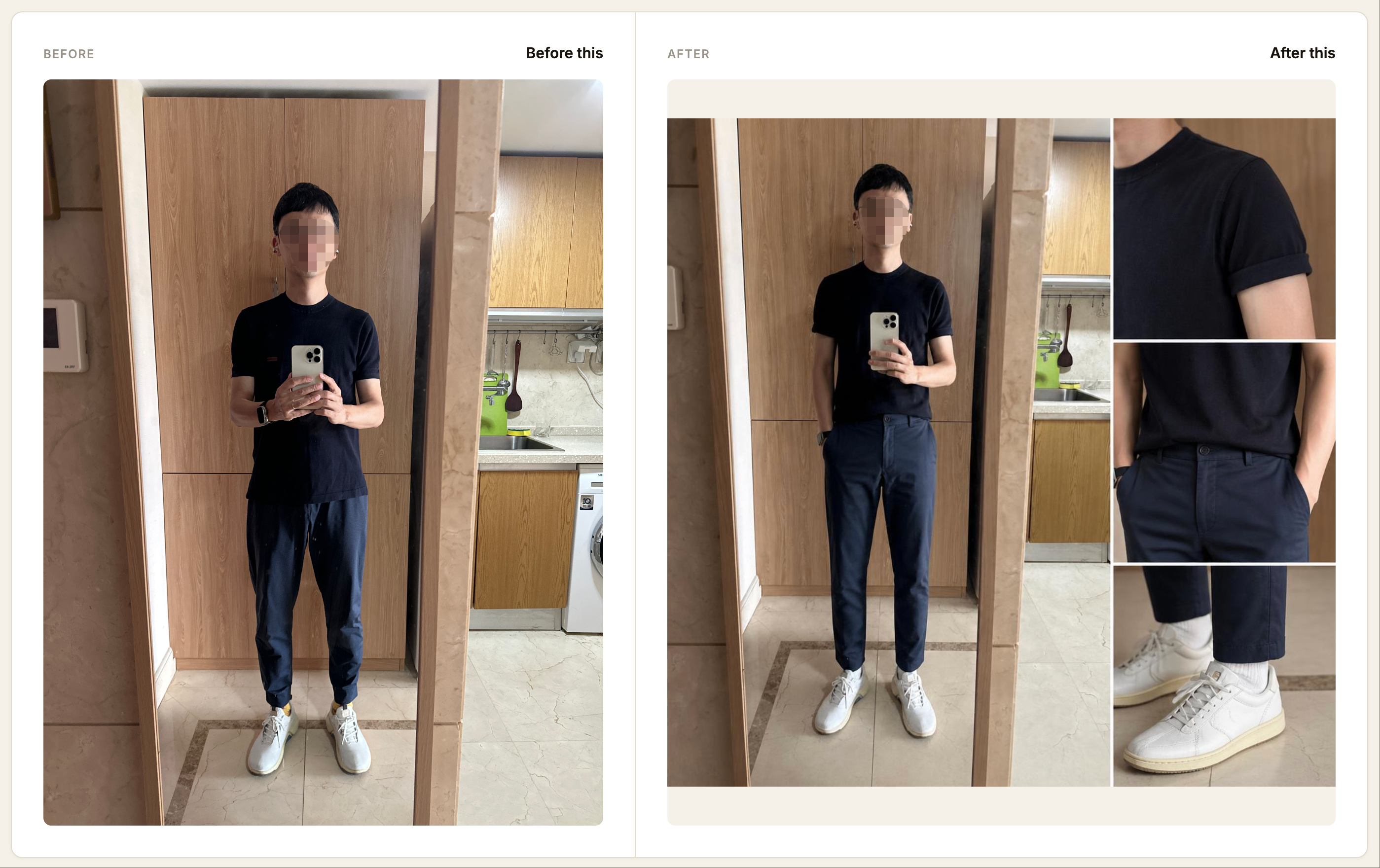
Specificity is the default, not the exception. Instead of "this doesn't work," AI feedback explains why: the shoe silhouette is too heavy relative to the slim-cut trousers, creating a visual imbalance. Instead of "nice outfit," it identifies that the color palette is working but the layering is adding bulk at the wrong place. That specificity is what lets you actually act on the feedback.
It respects your existing style. A well-designed AI recommendation system works with what you're wearing, not against it. The goal is incremental improvement — a fine-tune, not a rework. If you're going for a relaxed weekend look, the feedback shouldn't redirect you toward business casual. Dress Better's founder built the product around exactly this principle: suggestions that extend your current direction rather than override it.
Privacy is built in. You upload a photo, get analysis, and that's the transaction. No audience, no exposure, no waiting for a community to notice your post. For someone who wants feedback without performance, this matters a lot.
Where Each Method Falls Short
Social media feedback has real blind spots, but it also has things AI can't replicate. A fashion community can tell you whether a specific trend is landing right now, whether a brand's sizing runs true, or whether a particular combination feels dated versus fresh. Human aesthetic judgment has cultural context that AI models are still catching up to.
AI style recommendations, on the other hand, work best when you give them clear inputs. A full-body photo in decent light produces much better analysis than a cropped shot or a photo where the outfit is partially obscured. The AI is evaluating what it can see — so the quality of the input shapes the quality of the feedback.
AI also doesn't know your plans for the day. An outfit appropriate for running errands is different from one for a dinner that matters. Providing context — even just thinking about occasion-appropriateness when you upload — improves the relevance of the feedback you get.
Why AI Wins for Daily Use
The test that matters for most people isn't "which method produces the best fashion advice in ideal conditions." It's "which method can I realistically use at 7:45 AM when I'm trying to figure out if this outfit works."
Social media feedback requires posting, waiting, and hoping someone useful responds before you leave. On a good day, you might get two or three thoughtful comments. On a normal day, you get emoji reactions or silence.
AI style recommendations operate in a different time frame entirely. Upload a photo, get structured feedback in under a minute, make one small adjustment if needed, and leave the house. That's the whole loop.
The difference in friction is large enough that it changes behavior. People who want daily outfit feedback but won't post a mirror selfie every morning for public comment — which is most people — now have a realistic way to build that feedback loop into their routine.
There's also a learning dimension that social media can't easily provide. Dress Better's look history feature saves your analyzed outfits over time, tracking recurring patterns in what you wear and identifying the issues that come up most often. Seeing that you consistently have a proportions problem with a particular style of shoe, or that your color choices tend to work better in certain combinations, gives you something to actually work on. It turns individual feedback sessions into cumulative style development.
Making the Shift
The people moving from "rate my outfit" posts to AI style tools aren't abandoning fashion communities. Those communities still have value for discovery, inspiration, and understanding cultural context. What's changing is where people go for the specific, private, actionable feedback they need to get dressed with confidence.
For that use case — a specific outfit, today, assessed against real style criteria — AI style recommendations solve a problem that social media feedback structurally can't.
If you're ready to try it, Dress Better lets you upload a full-body outfit photo and get AI feedback on color, proportions, materials, and occasion fit — no account required to start, no audience required ever. The analysis takes under a minute, the suggestions are specific enough to act on, and your photo stays private.
That's a better feedback loop for most people most of the time.